
Predators & Criminal Processes
 Whilst the majority of violent incidents are spontaneous and involve individuals who are involved in “normal” social interactions that have gone wrong, there are times when we might be targeted by
predatory individuals who intend to cause us harm, and/or want to use the threat of force in order to ensure that we comply with one of their demands e.g., to handover our possessions and/or go with them etc.
Whilst the majority of violent incidents are spontaneous and involve individuals who are involved in “normal” social interactions that have gone wrong, there are times when we might be targeted by
predatory individuals who intend to cause us harm, and/or want to use the threat of force in order to ensure that we comply with one of their demands e.g., to handover our possessions and/or go with them etc.
Violent crime is not simply an act that bursts forth from nowhere; it is a process that unfolds through identifiable stages and mechanisms. Criminological and self-defense research suggests that violence is rarely random chaos but follows patterns rooted in how offenders select, approach, and control their victims. Understanding these processes is critical for prevention and for responding effectively when confronted by aggression. Violent crime begins with the recognition of opportunity.
Offenders do not strike blindly; they engage in target selection based on perceived vulnerability, environment, and the balance of risk and reward. Someone who appears unaware of their surroundings, distracted, or isolated may be viewed as a safer option than a person who is alert, confident, and/or in a group. This process reflects rational choice principles: offenders weigh potential gain/costs against the chance of being caught or injured. This decision-making process may be rapid and subconscious, but it still involves a degree of conscious assessment. This is why awareness and presence play such a large role in personal safety.
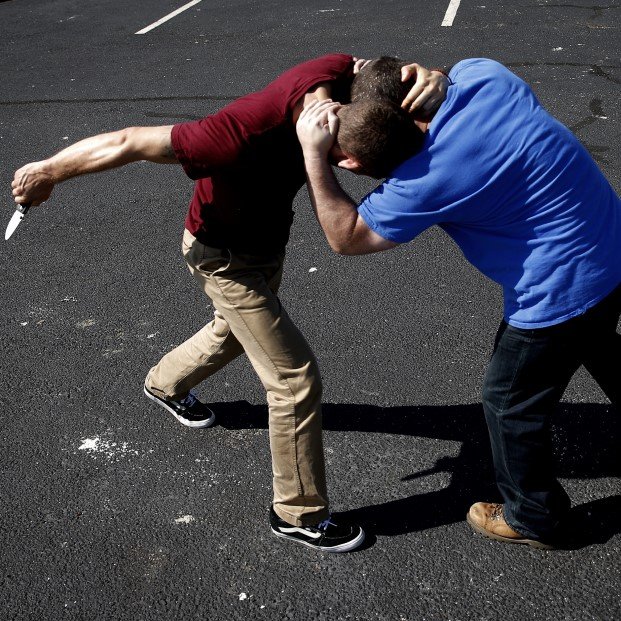 Once a target is identified, offenders often test boundaries. These pre-incident indicators are part of what we describe in the Krav Maga Yashir system as the “interview” stage. The criminal/offenders
might invade personal space, ask manipulative questions, or engage in low-level intimidation to gauge how a person will respond. If the potential victim/target asserts themselves appropriately, the
offender may disengage. If the person freezes or submits, the offender feels emboldened to escalate. This is not just about words but about reading non-verbal cues—tone, eye contact, posture. For
example, in robberies, muggers often use commands or threats not only to control those they target but also to test compliance.
Once a target is identified, offenders often test boundaries. These pre-incident indicators are part of what we describe in the Krav Maga Yashir system as the “interview” stage. The criminal/offenders
might invade personal space, ask manipulative questions, or engage in low-level intimidation to gauge how a person will respond. If the potential victim/target asserts themselves appropriately, the
offender may disengage. If the person freezes or submits, the offender feels emboldened to escalate. This is not just about words but about reading non-verbal cues—tone, eye contact, posture. For
example, in robberies, muggers often use commands or threats not only to control those they target but also to test compliance.
The next stage is approach and control. Offenders need to manage the environment to minimize the chance of resistance or interference. This may involve isolating the victim, using surprise, or displaying a weapon to instill fear. The threat of violence is often as powerful as violence itself. Ben Keren emphasizes that the fear response can paralyze victims, giving the offender greater control. This is part of why criminals brandish knives or firearms: the psychological dominance they achieve may be more useful than the actual use of the weapon. Violence in such cases may be instrumental in nature i.e., a means to an end, whether theft, domination, or revenge.
There are also affective processes at play in violent crime, where emotion rather than instrumental calculation drives action. Arguments that escalate into assaults or homicides follow a different trajectory. In these cases, triggers such as perceived disrespect, jealousy, or frustration build into anger, which narrows attention and reduces problem-solving capacity. The person becomes locked into a cycle of arousal where violence seems the only outlet. De-escalation, in this context, involves breaking that cycle before it passes the point of no return. Understanding whether violence is instrumental or affective changes how one should respond. Instrumental violence may allow negotiation, distraction, or avoidance, while affective violence requires de-escalation and/or disengagement (tactics and strategies that are emphasized in our Boston Krav Maga classes).
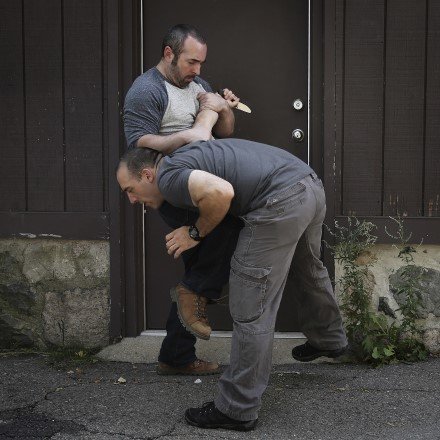 Control, dominance, and power are central to the processes of violent crime. Offenders rely on compliance, whether forced through threats or conditioned by intimidation. Violence is used not only
to achieve an immediate goal but also to reinforce authority. In domestic violence, for example, repeated acts of aggression create an ongoing system of power, where fear and unpredictability keep
the victim compliant. This process highlights that violence is not a one-off act but part of a continuing structure of control. Similarly, in street violence, reputation plays a role. The act of
committing violence may serve to establish or maintain status within a peer group or community. Here, the “reward” is not material but social, which helps explain why certain violent crimes seem
irrational from the outside.
Control, dominance, and power are central to the processes of violent crime. Offenders rely on compliance, whether forced through threats or conditioned by intimidation. Violence is used not only
to achieve an immediate goal but also to reinforce authority. In domestic violence, for example, repeated acts of aggression create an ongoing system of power, where fear and unpredictability keep
the victim compliant. This process highlights that violence is not a one-off act but part of a continuing structure of control. Similarly, in street violence, reputation plays a role. The act of
committing violence may serve to establish or maintain status within a peer group or community. Here, the “reward” is not material but social, which helps explain why certain violent crimes seem
irrational from the outside.
Another process involved is normalization. For many offenders, exposure to violence makes it feel acceptable or inevitable. Social learning plays a role, as individuals internalize behaviors modeled by peers, family, or cultural contexts. Violence becomes a script to follow when conflict arises. Offenders often use of “scripts and roles” in violent offending incidents with aggressors often follow rehearsed behaviors when asserting dominance. Recognizing these scripts- such as the way someone postures before throwing a punch or the verbal ritual before a fight - allows potential victims to predict and prepare for what comes next.
Environmental factors also shape violent crime. Poor lighting, isolated spaces, and environments without guardianship increase the likelihood of offenses. This reflects principles of environmental criminology, where the setting facilitates or constrains violence. Offenders are opportunistic and seek locations where intervention is unlikely. By understanding these situational factors, individuals and communities can design safer environments that disrupt the processes leading to violence.
An important aspect in effective self-defense training is recognizing the victim’s perspective. The processes of violent crime exploit predictable human reactions: fear, compliance, confusion, and denial. People often delay recognizing that they are in danger because they do not want to accept that violence is imminent. This hesitation, what criminologists sometimes call “normalcy bias,” gives offenders the upper hand. Overcoming denial and acting decisively is often the difference between escaping and becoming trapped in the offender’s process. Managing such thoughts, emotions and behaviors is key to managing violent incidents.
Finally, violent crime concludes with disengagement or escalation. Some offenders achieve their goal quickly and withdraw, while others prolong the encounter to inflict harm or assert greater dominance. The aftermath also carries weight: victims must deal with trauma, while offenders may reinforce their patterns by experiencing success without consequence. This cyclical reinforcement means that prevention and interruption are essential, because each successful offense strengthens the likelihood of repetition.
When violent crime can be framed as a process the importance of preparation and awareness becomes key. Violence is not random chaos but follows identifiable stages—target selection, testing, approach, control, escalation, and conclusion. By understanding these stages, individuals can intervene earlier, de-escalate when possible, disengage when necessary, and defend effectively if no other option remains. This perspective demystifies violence, showing it not as an incomprehensible eruption but as a set of human behaviors that can be studied, anticipated, and countered. In recognizing violent crime as a process, we gain both clarity and agency, improving our ability to survive and prevent harm in a world where violence remains an enduring threat.